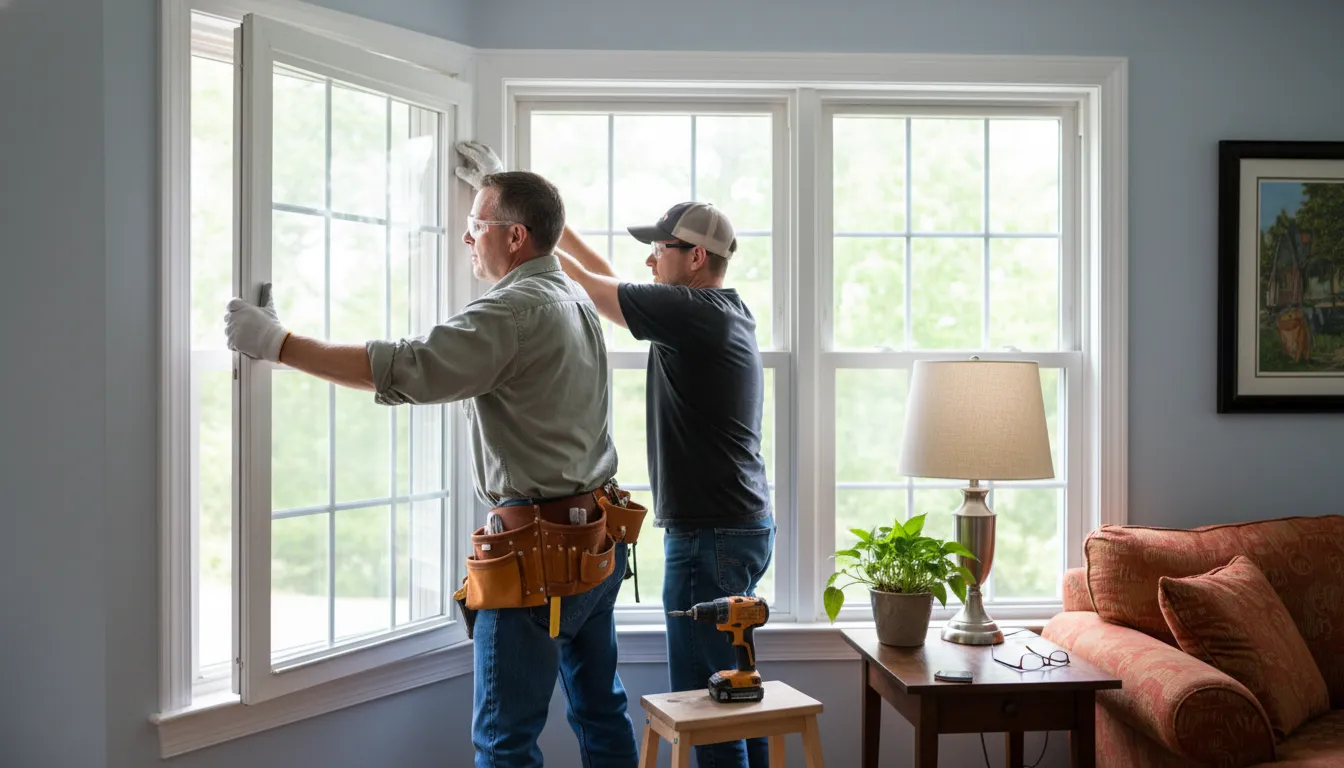
Find the Best Window Replacement Contractors for Your Business
No obligation • Fast responses • Nationwide coverage

Why you can trust Window Rank
Window Rank is a leading U.S. resource for homeowners researching window repair, replacement, egress windows, and sliding glass doors. Our editors analyze services, credentials, and customer feedback to present clear, unbiased comparisons. Companies cannot pay to change our evaluations or featured information.
Search providers near you
Best Window Replacement Contractors in Vermont Ranked
Upgrading your windows is one of the most impactful home improvements you can make in Vermont. It directly combats the state's harsh winters by improving energy efficiency, enhancing comfort, and reducing heating bills. This guide will help you understand the key considerations for window replacement in Vermont, from selecting the right energy-efficient features to navigating local building codes, so you can make an informed decision and connect with qualified local professionals for your project.
Why Vermont Homes Need High-Performance Windows
Vermont's climate presents a unique challenge for homeowners: long, cold winters and a strong desire for energy independence. Old, drafty windows are a primary source of heat loss, forcing your furnace to work harder and driving up energy costs. Modern replacement windows are engineered to create a tight thermal barrier. By investing in high-performance units, you not only gain a more comfortable, draft-free living space but also make a long-term investment in lower utility bills and increased home value. Proper installation is just as critical as the window itself; a poorly installed premium window will not perform as intended.
Understanding Vermont's Window Energy Codes
All window replacement projects in Vermont must comply with the state's Residential Building Energy Standards (RBES)1. These codes are designed to ensure new installations meet minimum efficiency levels. The key metrics to understand are on the National Fenestration Rating Council (NFRC) label found on every qualified window:
- U-Factor: Measures the rate of heat loss. Lower numbers are better for cold climates. Vermont's RBES requires specific, low U-factors to minimize heat escape 2.
- Solar Heat Gain Coefficient (SHGC): Measures how much solar heat passes through the glass. In Vermont, a moderate SHGC can be beneficial for passive solar heating in winter, but it must be balanced to avoid summer overheating.
- Double-Glazing: The RBES effectively requires double-pane insulating glass in most residential applications during colder months. The air or gas space between the panes is a crucial insulating layer.
- Low-E Coatings: These nearly invisible metallic coatings are essential. They reflect interior heat back into the room during winter and can reflect solar heat away in summer, playing a vital role in meeting code requirements and boosting efficiency.
Choosing the Right Window Type and Material
The best window for your home depends on your architectural style, ventilation needs, and budget.
Common Window Styles:
- Double-Hung & Single-Hung: The classic, versatile choice. Both sashes move in a double-hung, allowing for flexible top and bottom ventilation. They are widely available and suit most home styles.
- Casement & Awning: Hinged on the side (casement) or top (awning), these windows crank open. They provide an excellent seal when closed, making them among the most energy-efficient operating styles, and offer great airflow.
- Sliding (Gliding): Easy to operate with a simple side-to-side motion. They are a practical choice for wider openings, like in basements or modern living spaces.
Window Frame Materials:
- Vinyl: The most popular choice for replacement projects due to its affordability, durability, and low maintenance. Modern vinyl windows offer good thermal performance and never need painting.
- Fiberglass: Extremely strong and stable, with excellent insulation properties. Fiberglass frames can expand and contract very little with temperature swings, leading to superior long-term durability and performance, often at a higher cost than vinyl.
- Wood & Clad-Wood: Wood interiors offer timeless beauty and natural insulation. Clad-wood windows have an exterior layer of vinyl or aluminum to protect the wood from the elements, reducing maintenance while preserving the interior aesthetic3.
Critical Features for Vermont's Climate
Beyond the basic style and material, specific features are non-negotiable for performance in Vermont.
- Double-Pane Insulating Glass: This is the standard baseline. For maximum efficiency, especially in colder regions of the state, triple-pane glass is worth considering for its superior insulating value.
- Gas Fills: The space between panes is often filled with Argon or Krypton gas. These dense, inert gases provide better insulation than air, reducing heat transfer and improving U-factors.
- Warm Edge Spacers: The spacer bar that separates the glass panes at the edge of the unit is a common weak point for condensation and heat loss. "Warm edge" spacers are made of less conductive materials to mitigate this issue.
- Weathertight Seals: High-quality weatherstripping around the operable sash is essential to prevent air infiltration. Look for multiple chambers and bulb seals in the frame design for an airtight fit.
Egress and Safety Requirements
If you are replacing windows in bedrooms or basements, egress codes for fire safety apply. The Vermont Fire & Building Safety Code specifies minimum dimensions to allow for escape and rescue4. A common requirement is a clear opening of at least 20 inches wide by 24 inches high, with a net clear opening of 5.7 square feet. The bottom of the opening cannot be more than 44 inches off the floor. Always verify the specific requirements with your local building inspector before finalizing a window order for these rooms.
Installation: Full-Frame vs. Insert (Pocket)
The installation method significantly impacts the project's scope, cost, and outcome.
- Insert Replacement (Pocket): The new window is installed inside the existing frame. This is less disruptive, faster, and more affordable, as it preserves interior and exterior trim. It's only possible if the existing frame is structurally sound and square.
- Full-Frame Replacement: The entire old window, including the frame and trim, is removed down to the rough opening. This allows for a thorough inspection of the wall structure, repair of any rot or water damage, and perfect re-leveling. It is the best method for ensuring optimal performance and is necessary when the old frame is damaged.
Find the perfect window replacement contractors for your needs
Get personalized recommendations and expert advice
Understanding Costs and Value in Vermont
Window replacement is an investment. Installed costs in Vermont typically range from $500 to $1,500 or more per window5 6. The final price depends on:
- Window Size and Style: Larger windows and complex shapes (arches, circles) cost more. Casement windows are generally more expensive than double-hung.
- Material and Features: Fiberglass and clad-wood command higher prices than vinyl. Triple-pane glass, special gas fills, and high-performance Low-E coatings add to the cost but also to the long-term savings.
- Installation Complexity: Full-frame installation, work on upper floors, or dealing with rot repair will increase labor costs, which can range from $70 to $300+ per window7 8.
- Permits: Most Vermont municipalities require a building permit for window replacement, which involves a fee and an inspection to ensure code compliance9 10.
While the upfront cost is significant, remember the return on investment. High-efficiency windows can reduce heat loss by 30-50%11. You'll save money on heating bills every year, increase your comfort, and boost your home's resale value.
The Installation Process and Working with Professionals
A successful project hinges on proper installation. Here's what a professional process looks like:
- Consultation and Measurement: A qualified installer will assess your needs, take precise measurements, and discuss options. This is when you should review product samples and NFRC labels.
- Permitting: Your contractor should typically pull the required local building permits.
- Preparation and Removal: The work area is protected. Old windows are carefully removed.
- Installation: Windows are leveled, squared, fastened securely, and sealed with high-quality flashing and insulation to prevent air and water leaks.
- Finishing: Interior and exterior trim is installed or repaired, and caulking is applied.
- Inspection and Cleanup: The work is cleaned up, you are shown how to operate the windows, and a final inspection is often conducted.
Always choose licensed and insured professionals with strong local references. Ask about their experience with Vermont's RBES and request a detailed, written contract that includes all products, costs, and timelines.
Frequently asked questions
Sources
Footnotes
-
Residential Building Energy Standards - Department of Public Service - https://publicservice.vermont.gov/efficiency/building-energy-standards/residential-building-energy-standards ↩
-
Energy Code Compliance Guide to Window Selection in ... - https://efficientwindows.org/wp-content/uploads/codes2009/Vermont%2009%20EWC.pdf ↩
-
Windows & Doors - Efficiency Vermont - https://www.efficiencyvermont.com/products-technologies/insulation-windows-doors/windows-doors ↩
-
2025 Vermont Fire & Building Safety Code - https://firesafety.vermont.gov/sites/firesafety/files/Rules/2025%20Vermont%20Fire%20%26%20Building%20Safety%20Code.pdf ↩
-
Windows Replacement in Vermont (2025) - https://www.ecowatch.com/windows/replacement/vt ↩
-
How Much Does It Cost to Replace Windows in 2025? - Cobex - https://cobexcg.com/how-much-does-it-cost-to-replace-windows/ ↩
-
Home Depot Windows Review 2025: Quality & Professional Installation - https://modernize.com/windows/best-companies/home-depot-windows ↩
-
Window Prices by Size [2025 Data] - Angie's List - https://www.angi.com/articles/window-prices-by-size.htm ↩
-
Window and Zoning Requirements in Greater Burlington, VT - https://acmeglassvt.com/up-to-code-window-and-zoning-requirements-in-greater-burlington-vt/ ↩
-
Understanding Building Codes and Regulations for ... - JKR Windows - https://jkrwindows.com/2023/06/12/understanding-building-codes-and-regulations-for-window-installation/ ↩
-
Windows and Doors | Vermont Energy Saver - https://energysaver.vermont.gov/weatherization/windows-and-doors ↩