Find the Best Egress Window Repair Contractors for Your Business
No obligation • Fast responses • Nationwide coverage

Why you can trust Window Rank
Window Rank is a leading U.S. resource for homeowners researching window repair, replacement, egress windows, and sliding glass doors. Our editors analyze services, credentials, and customer feedback to present clear, unbiased comparisons. Companies cannot pay to change our evaluations or featured information.
Search providers near you
Best Egress Window Repair Contractors in Vermont Ranked
An egress window is a critical safety and functional feature for any basement living space in Vermont. Proper egress window repair ensures your basement remains a safe, legal, and dry environment by addressing water intrusion, maintaining clear emergency escape routes, and complying with strict state building codes. This guide will help you understand the common issues, Vermont-specific requirements, and repair processes, so you can effectively communicate your needs and find qualified local professionals to restore safety and functionality to your home.
Why Egress Window Repair is Essential in Vermont
In Vermont, where basements are commonly used for bedrooms, home offices, or additional living areas, a functioning egress window is non-negotiable. Its primary purpose is to provide a reliable emergency exit in case of fire or other hazards 1. Beyond safety, a well-maintained egress window and its accompanying well system are your first line of defense against Vermont's heavy rain and snowmelt, which can lead to basement flooding, mold growth, and structural damage 2. Neglecting repairs not only creates a safety hazard but can also lead to costly water damage and violate state fire and building codes, potentially impacting your home insurance and resale value.
Common Egress Window Problems in Vermont Homes
Understanding the typical issues helps in diagnosing problems early. Most repair needs fall into a few key categories:
- Water Intrusion and Drainage Failures: This is the most frequent complaint. Clogged window well drains, often filled with leaves, dirt, or degraded gravel, prevent water from escaping. Poor grading around the well that slopes toward the house or failing sealant around the window frame itself are also major culprits for leaks.
- Structural and Component Damage: Over time, window wells can rust (if metal), crack (if plastic or masonry), or become misshapen. The egress window itself may have a cracked pane, a broken sash that won't open, or a damaged frame that compromises both security and water-tightness.
- Code Compliance Issues: Many older Vermont basements have windows that do not meet current egress requirements for size or accessibility. A window that is too small, placed too high off the floor, or blocked by an improperly sized well creates a dangerous situation and makes the basement legally uninhabitable as a bedroom.
- Debris and Blockages: Window wells can easily become collection points for leaves, sticks, and snow, physically blocking the escape opening and trapping moisture against the foundation.
Vermont's Egress Window Code Requirements
Any repair or replacement work must adhere to Vermont's Fire & Building Safety Code, which is based on international standards with specific amendments. Key requirements include:
- Minimum Opening Size: For new construction or full replacement, the clear opening must be at least 5.7 square feet. For existing basements being renovated, the minimum is 5.0 square feet. The opening must also be at least 20 inches wide and 24 inches high (measured from the sash) 3.
- Maximum Sill Height: The bottom of the clear opening (the sill) must be no more than 44 inches above the finished basement floor. This ensures occupants, including children and elderly individuals, can climb out 4.
- Operability and Accessibility: The window must be operable from the inside without the use of tools, keys, or special knowledge. The path from the window to ground level must be clear, typically requiring a window well if the window is below grade.
- Ladder or Steps Requirement: If the bottom of the clear opening is more than 44 inches from the floor inside or the ground outside, a permanent ladder or steps must be installed inside the well. These must be at least 12 inches wide.
- Well Size and Clearance: The window well must provide enough clearance for the sash to open fully (typically 90 degrees). For wells deeper than 44 inches, there must be at least 36 inches of horizontal projection (front to back) and 36 inches of width to allow a firefighter with equipment to enter 5.
Find the perfect egress window repair contractors for your needs
Get personalized recommendations and expert advice
The Egress Window Repair Process: What to Expect
A professional repair typically follows a structured process to ensure safety and longevity.
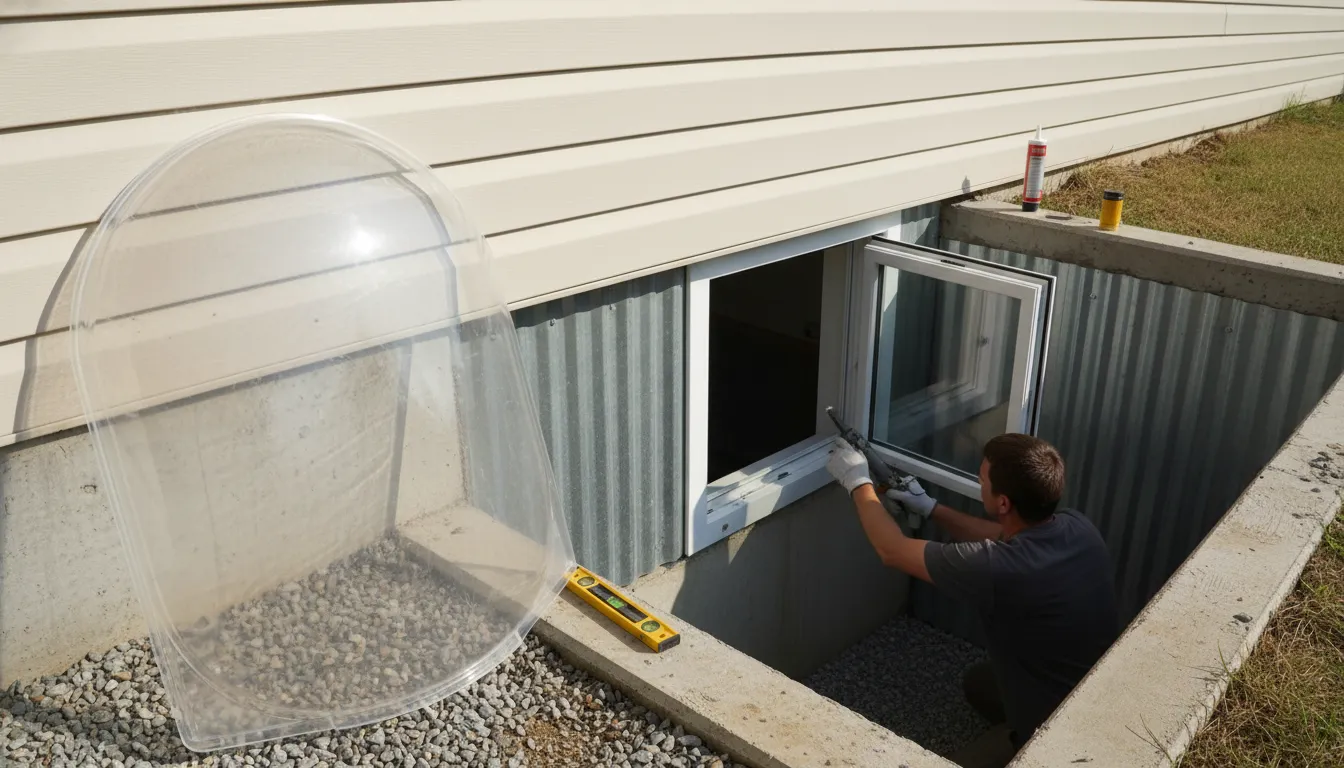
- Inspection and Assessment: A qualified technician will inspect the window, well, and surrounding area. They will identify the source of leaks, check for structural damage, measure the opening to verify code compliance, and assess the drainage situation.
- Drainage Correction: For water issues, this often involves clearing debris from the well, replacing or adding a gravel layer at the base to improve drainage, and ensuring the well drain (if present) is unclogged and channels water away from the foundation. In some cases, regrading the landscape around the well may be necessary 6.
- Sealing and Leak Repair: The technician will remove old, cracked caulk and sealant from around the window frame and where the well meets the foundation. They will apply new, high-quality waterproof sealant to create a watertight barrier 7.
- Component Repair or Replacement: Damaged parts like broken window sashes, cracked glass, or a rusted-through well may need to be repaired or replaced. This could range from installing a new window into the existing rough opening to a full well replacement.
- Code-Compliance Upgrades: If the inspection reveals the window is too small or the well is inadequate, the repair will shift toward a replacement project to bring the system up to current Vermont standards. This ensures the safety and legality of the basement space.
Understanding Costs for Repair and Replacement in Vermont
Costs can vary widely based on the scope of work, from a simple sealant job to a major excavation and installation project.
- Basic Repairs (Sealing, Drain Cleaning): These are typically the most affordable options, often ranging from a few hundred dollars for labor and materials to address minor leaks and clogs.
- Window Well Replacement: Replacing a damaged or undersized well involves labor and new materials. Costs generally range from $1,000 to $5,000+, depending on the well's size, material (polyethylene, steel, masonry), and the complexity of the excavation.
- Full Egress Window Installation: Creating a new code-compliant egress opening where one didn't exist or replacing a non-compliant window is the most involved project. This includes cutting the foundation, installing a new window and well, and addressing drainage. Prices in Vermont typically range from $1,500 to $7,500 or more for complex jobs.
- Additional Costs: Always factor in the cost of a local building permit, which can range from $50 to $500 depending on your Vermont town 8. Necessary accessories like permanent ladders for deep wells or protective covers can add $100 to $800+ to the total project cost 9.
Choosing a Professional for Your Vermont Egress Window Repair
Given the safety and structural implications, selecting the right professional is crucial.
- Verify Licensing and Insurance: Ensure the contractor is licensed to work in Vermont and carries both liability and worker's compensation insurance.
- Check for Code Knowledge: Ask specifically about their experience with Vermont's egress window codes. A knowledgeable pro will be familiar with the 5.7 sq ft, 44-inch sill height, and ladder requirements.
- Review Past Work and References: Look for contractors with a portfolio of egress projects and ask for references from past clients, especially those with similar water intrusion issues.
- Get Detailed, Written Estimates: A trustworthy estimate should break down costs for labor, materials (window and well specifications), permits, and any excavation or landscaping work. It should also describe the scope of work in detail.
- Understand Warranty Coverage: Ask about warranties on both the materials (often from the manufacturer) and the labor (from the contractor).
Frequently asked questions
Sources
Footnotes
-
Emergency Egress Windows - Vermont Fire Safety - https://firesafety.vermont.gov/sites/firesafety/files/files/Documents/dfs_codesheet_egress_windows.pdf ↩
-
The Complete Guide to Egress Windows & Wells - Residential ResQ - https://www.residentialresq.com/the-complete-guide-to-egress-windows-wells-safety-functionality-and-home-value/ ↩
-
Egress Windows Buying Guide - The Home Depot - https://www.homedepot.com/c/ab/egress-windows-buying-guide/9ba683603be9fa5395fab901401ea56c ↩
-
Egress Windows 101: Function, Code Standards, and the Pros ... - https://acmeglassvt.com/egress-windows-101-function-code-standards-and-the-pros-and-cons/ ↩
-
FIRE & BUILDING SAFETY CODE - https://firesafety.vermont.gov/sites/firesafety/files/Rules/VFBSC%202025%20Rules%20Final.pdf ↩
-
Basement Window Replacement in Northern New England: Tips for Egress Windows - https://www.groundworks.com/resources/new-england-basement-window-replacement-tips/ ↩
-
Common Window Well Problems - Flooding, Drains & Safety - https://windowwellsupply.com/blog/common-window-well-problems-flooding-drains-safety/ ↩
-
Egress Window Permits: A Contractor's Guide - PermitFlow - https://www.permitflow.com/blog/egress-window-permit ↩
-
Basement Egress Window Installation: What You Should Know? - https://zavzaseal.com/blog/basement-egress-window-installation-long-island/ ↩