
Window sash and balance repair options for homeowners
How sash and balance systems actually work
In a typical double-hung or single-hung window, the sash is the framed glass panel that moves up and down. The sash is kept from slamming by a counterbalance system hidden in the jambs (the vertical sides of the frame).
Most modern vinyl and aluminum windows use spring or coil balances: a metal or plastic shoe in the side channel connects to a spring that supports part of the sash weight. Older wood windows often use cord-and-weight systems (rope running over a pulley to a cast iron weight) or flat "spiral balances" that twist to add friction.1
When everything is working, you should be able to lift the sash with one hand and have it stay where you leave it without drifting up or crashing down.
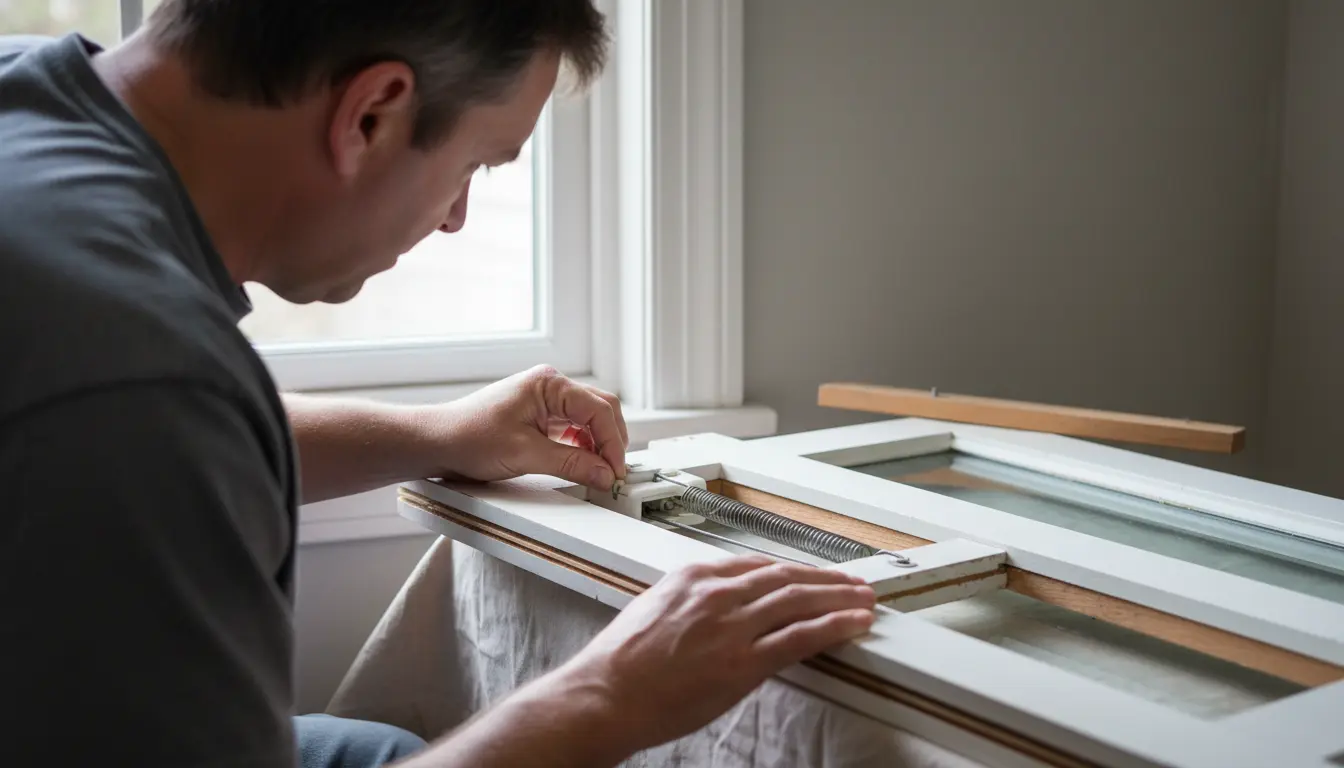
Common signs your sash or balance is failing
If your window is hard to use, it's usually giving you clues. Typical symptoms include:
- Window won't stay up - The sash slowly creeps down or drops as soon as you let go. This points to broken or weak balances, disconnected shoes, or snapped cords.
- Window is very hard to open or close - Could be dirty tracks, paint buildup on wood windows, a jammed balance shoe, or a sash that has come out of alignment.
- Sash is crooked or racked in the opening - Often one balance or cord has failed, so one side is supporting the weight and the other is not.
- Rattling or banging inside the frame - In old cord-and-weight systems, a broken sash cord lets the weight fall into the cavity and bang around.1
- Visible damage in the side channel - Cracked plastic balance shoes, popped springs, or frayed cords are your smoking gun.
The bottom line: if the sash won't stay where you put it or suddenly feels much heavier, the balance system needs attention.
DIY repair options (and when they make sense)
Many sash and balance issues are fixable by a handy homeowner with basic tools. The feasibility depends on your window type and comfort level.
1. Clean and lubricate first
Before assuming a major failure:
- Vacuum the tracks and side channels. Grit and debris can lock up balance shoes.
- Clean with mild soap and water; avoid harsh solvents on vinyl.
- Use a dry silicone spray (not greasy oil) on vinyl or aluminum tracks and moving hardware.
If operation improves and the sash stays up, you may not need parts at all.
2. Replacing balances on modern vinyl or aluminum windows
For many tilt-in double-hung windows, you can:
- Remove the sash (typically by tilting it in and lifting).
- Identify the balance type - coil (constant force), block-and-tackle, or spiral, plus any part numbers stamped on the metal or printed on a label.
- Order replacement parts that match the weight rating and length. Many manufacturers and aftermarket suppliers sell exact-match balances.2
- Swap balances - often involves unscrewing a few fasteners, clipping in the new balance, and re-engaging the shoe with the sash pivot bar.
This is a realistic DIY project if:
- You're comfortable removing sashes.
- You can clearly access the balance pockets without cutting into trim.
- You have multiple identical windows (so one can be your "reference" for how things should look).
3. Repairing old wood windows with cords and weights
Traditional wood double-hung windows can often be restored rather than replaced:
- Replace broken sash cords by removing interior stops and parting beads, fishing out the weights, and threading new cotton or synthetic sash cord over the pulleys.1
- Free painted-shut sashes with careful scoring of paint lines and gentle prying.
- Add weatherstripping and tune-up hardware while you're in there for smoother operation.
This is more involved carpentry. It's great for older homes where preserving original windows matters, but it may be beyond first-time DIYers.
When to call a window repair company instead
Even if you're handy, there are times when hiring a pro is the better move.
Situations that favor a pro
- You can't identify the parts. Some manufacturers use proprietary balances or clips that are tricky to match.
- Multiple windows have issues. A repair tech can diagnose a whole house in one visit and often discounts per-window pricing.
- Frame or sash damage is present. Rot, cracked sash corners, or warped frames turn a simple balance job into structural repair.
- Upper-story windows. Balances on second or third floors may require ladders or scaffolding that a pro already owns and knows how to use safely.
- Limited mobility or time. If kneeling, reaching, and lifting windows isn't realistic, outsourcing is safer.
What a pro typically does on a service call
A good window repair technician will usually:
- Inspect each problem window, test sash operation, and check for frame out-of-square or settlement issues.
- Identify the balance or cord system and confirm parts availability.
- Recommend repair vs. replacement only if the frame or sash is too far gone to justify fixing.
- Perform adjustments (re-leveling sashes, re-engaging balance shoes, replacing minor hardware) on the spot when possible.
Window repair companies work on existing windows only, so they're often more focused on restoration than replacement contractors who primarily sell new units.
How to choose between DIY and hiring a pro
Use these quick decision checks:
-
Your comfort level with disassembly
- Comfortable removing sashes and interior trim? DIY might work.
- Nervous about breaking glass or damaging trim? Lean pro.
-
Scope of the problem
- One sticky window, obviously dirty tracks? Try cleaning and lubrication first.
- Several windows dropping shut or with broken cords? A pro visit can be cost-effective.
-
Age and type of window
- Newer vinyl/aluminum with standard balances: DIY part replacement is often straightforward if you can match parts.
- Historic wood windows with cords and weights: best handled by pros who specialize in restoration, especially if you care about maintaining original character.1
-
Budget vs. long-term value
- Balances and cords are relatively inexpensive parts; the main cost is labor. Getting it right the first time can extend window life significantly, delaying full replacement.2
Simple maintenance to prevent future balance problems
Once your windows are working properly again, a little routine care helps them stay that way:
- Clean tracks and side channels once or twice a year. Vacuum, then wipe with a damp cloth.
- Inspect weatherstripping and sash alignment during seasonal checks; a dragging sash stresses balances.
- Open and close each operable window a few times annually. Regular movement keeps hardware from seizing up.
- Address small issues early. A sash that just starts to drift down usually means a balance is weakening; replacing it before it fails completely can prevent sudden slams and possible glass breakage.
Conclusion
If your windows won't stay open or are a struggle to move, diagnosing the sash and balance system gives you a clear path: simple cleaning or part swaps for confident DIYers, and a window repair pro when the problems are bigger than your toolkit.
Glossary
- Sash - The framed glass panel that moves within a window.
- Balance - Hidden spring, cord, or weight system that counterbalances the sash so it moves smoothly.
- Sash cord - Rope or cord connecting a wood sash to a hidden weight in older windows.
- Balance shoe - Plastic or metal piece in the side channel that links the sash to the balance spring.
- Double-hung window - Window where both the upper and lower sashes can move.
Sources
Footnotes
-
National Park Service. "Repairing Double-Hung Window Sashes and Weights." (Technical Preservation Services guidance on traditional sash, cords, and weights.) ↩ ↩2 ↩3 ↩4
-
Fenestration & Glazing Industry Alliance (FGIA). "Hardware and Component Performance for Residential Windows" (industry guidance on balances, serviceability, and replacement.) ↩ ↩2