
When to repair versus replace old windows
Quick answer
Repair usually makes more sense when the window frames are solid and your problems are localized; replacement is smarter when damage, drafts, or failures are widespread. If you're dealing with a few sticky sashes, broken locks, or a cracked pane, targeted window repair is often far cheaper and preserves your home's character. When most of your windows are rotting, permanently fogged, or so drafty that rooms are uncomfortable, investing in new, energy-efficient units starts to pay off in comfort and lower heating and cooling use.
1. Start with age, type, and overall condition
Before you jump to repair or replacement, take 10-15 minutes to assess what you actually have.
Age and quality
- Under ~15 years old: Modern double-pane windows that are less than 10-15 years old and otherwise solid are usually worth repairing unless there's major installation or manufacturing issues.
- 15-25 years old: This is a gray zone. Good wood or fiberglass windows may still have plenty of life with repairs; cheaper builder-grade units may be nearing the end of their useful life.
- 30+ years or unknown age: Older single-pane wood or aluminum windows often need constant attention. Some are great candidates for repair (especially solid old wood); others are so inefficient or deteriorated that replacement is more practical.
Window type
- Single-pane wood or aluminum: Often leaky and inefficient by modern standards, especially in cold or very hot climates.
- Double-pane (insulated glass) units: Better for comfort and efficiency but can "fail" when seals break and moisture fogs the space between panes.
Frame and wall condition
Walk around the house and check a sample in each room:
- Press a screwdriver gently into sills and lower jambs - soft, crumbly wood means rot.
- Look for signs of water staining, peeling paint, or mold around the frame or interior wall.
- Open and close each sash: note any that stick, slam shut, or won't latch.
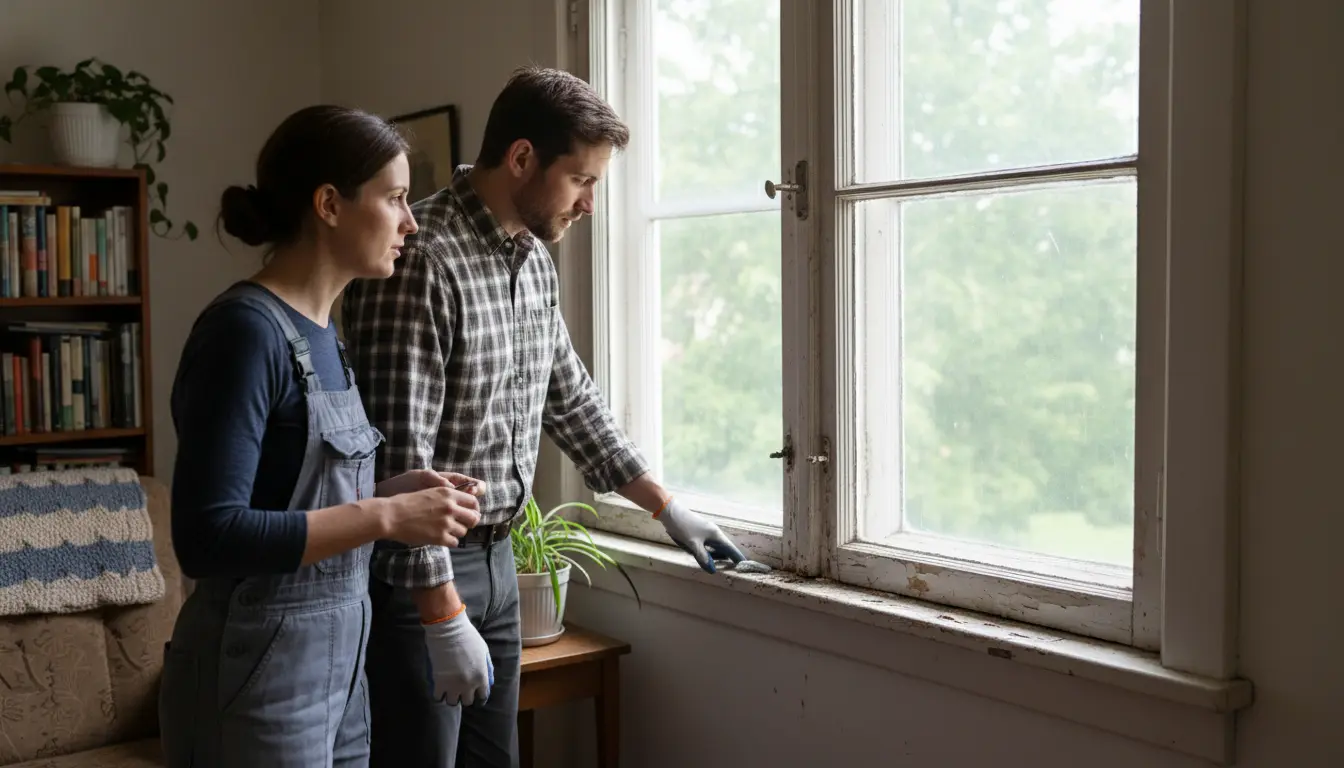
If most frames are straight and solid and only a few windows misbehave, you're in repair territory. If rot, leaks, or sticking sashes are common across the house, start thinking replacement.
2. Signs a window is a good repair candidate
Lean toward repair when the problem is specific, and the frame is sound. Common examples:
-
Cracked or broken glass in an otherwise solid frame
- Single-pane glass can usually be replaced without touching the frame.
- Many insulated glass units (IGUs) can be swapped into an existing sash.
-
Hardware failures (locks, cranks, latches, balances, sash cords)
- These are classic window repair jobs: replacing balances that let a sash stay up, new latches for security, or new cranks on casement windows.
-
A few sticky or out-of-square sashes
- Planing a tight wood sash, rehanging, re-shimming, or adjusting hinges often restores smooth operation.
-
Minor drafts and air leaks
- If you feel a draft only at a few points, fresh weatherstripping and caulk can make a big difference at low cost. That matters, because heat gain and loss through windows can account for roughly 25-30% of home heating and cooling energy use.1
-
Older but high-quality wood windows
- Solid, repairable wood windows in older homes can perform surprisingly well once you:
- Reglaze loose panes
- Add or replace weatherstripping
- Repair rot in small sections (epoxy, Dutchman repairs)
- Use interior or exterior storm windows for an efficiency boost
- Solid, repairable wood windows in older homes can perform surprisingly well once you:
-
Historic character or strict neighborhood rules
- In historic districts, keeping original windows and upgrading them (weatherstripping, storms, careful repairs) often preserves both the look and the resale appeal better than swapping in modern units.
In all of these cases, a window repair specialist or carpenter can usually restore performance for a fraction of full replacement, especially if only a handful of windows are problematic.
3. Signs it's time to replace instead of repair
Replacement becomes the better long-term move when problems are widespread or baked into the window's design. Key red flags:
Structural and moisture problems
- Extensive rot or insect damage in sills, jambs, or frames that keeps spreading.
- Warped frames that are visibly out of square, leaving gaps you can't reasonably seal.
- Recurring water intrusion around the window despite previous caulking or trim repairs - often a sign of flashing or framing issues best addressed with a full tear-out.
When the structure around the glass is failing, repair becomes patchwork; you're better off replacing the entire unit and fixing underlying moisture details at the same time.
Failed double-pane seals across many windows
One or two fogged insulated glass units can be replaced. But if a large share of your double-pane windows have permanent fogging or mineral deposits between panes, it suggests the units are aging out or were poor quality to begin with. At that point:
- The cost of replacing many glass units approaches that of new windows.
- You still have older frames and hardware that may soon need attention.
A full upgrade can be more sensible, especially if you plan to stay in the home for years.
Chronic drafts, hot/cold rooms, and very old single-pane windows
If rooms near certain windows are always cold in winter and hot in summer, and air leaks persist after basic sealing work, the window design may be the real problem.
- The U.S. Department of Energy notes that heat gain and loss through windows accounts for about 25-30% of residential heating and cooling energy use.1
- Installing modern ENERGY STAR® certified windows can cut heating and cooling bills by up to about 13% on average nationwide compared with non-certified products.2
That doesn't mean new windows instantly "pay for themselves," but if:
- You have many leaky single-pane units, and
- You're already planning to be in the home for 7-10+ years,
then upgrading to efficient replacements can significantly improve comfort and reduce energy use over time.
Safety and usability issues
Consider replacement when windows are unsafe or unusable in everyday life:
- Bedroom windows that won't open, won't stay open, or are painted shut, making emergency escape difficult.
- Locks that can't be reliably repaired, compromising security.
- Glass that's dangerously loose in the sash.
While many of these issues are repairable, if they show up across multiple old windows, replacing them may be the most dependable way to restore safe operation.
4. A simple repair vs. replace checklist
Use this quick checklist room by room:
If MOST of these are true, lean toward REPAIR:
- Frames and sills are straight and solid; no widespread rot.
- Only a few windows are drafty or sticky.
- Problems are specific (a broken latch, a single cracked pane, one fogged IGU).
- You value the existing look (especially older wood windows).
- You're on a tight budget or may move within a few years.
If SEVERAL of these are true, lean toward REPLACEMENT:
- Many windows show rot, water staining, or soft wood.
- Several double-pane units are permanently fogged between the glass.
- You still have uncomfortable drafts and temperature swings after sealing.
- Windows are 25-30+ years old, especially single-pane units.
- Multiple windows don't open, don't latch, or feel unsafe.
Bottom line: If your window frames are sound and issues are isolated, repair is usually the smartest first step; if problems are structural, widespread, and hurting comfort, full replacement is often the better investment.
5. Working with local pros (and what to ask for)
Once you've walked through your home, bring in a qualified window pro to sanity-check your impressions. When you get estimates:
- Ask for both options when possible. For borderline cases, request a repair estimate and a replacement price for the same opening.
- Insist on clear scopes. A good quote should spell out exactly which windows will be repaired or replaced, what materials are used, and how air and water sealing will be handled.
- Get at least 2-3 quotes. Labor rates, product options, and repair vs. replace recommendations vary a lot between companies.
- Tell them your priorities. If your main goals are comfort and stopping drafts, repairs plus targeted replacements might be ideal. If you're already remodeling siding or trim, it can be a good moment to tackle full window replacements because the walls are open.
You don't have to decide everything at once. Many homeowners phase projects: repair what's easily fixable now, then replace the worst-performing windows in groups over several years.
In the end, you should replace old windows when structural damage, widespread failures, and poor comfort outweigh the benefits of relatively low-cost repairs to otherwise solid units.
Glossary
- Sash - The moving or fixed frame that actually holds the glass within the overall window frame.
- Insulated glass unit (IGU) - A sealed double- or triple-pane glass assembly with a gas-filled space between panes for better insulation.
- Single-pane window - A window with just one layer of glass and no sealed air space; common in older homes.
- Weatherstripping - Flexible material installed where sashes meet frames to reduce air leaks when windows are closed.
- ENERGY STAR window - A window that meets U.S. Environmental Protection Agency and Department of Energy efficiency criteria for a given climate zone.